
Could Your Jaw Be Contributing to Your Pain?
Recurring headaches, facial pain, jaw discomfort, ear symptoms, dizziness, and neck tension can be frustrating—especially when the cause is unclear. In some patients, these symptoms may be connected to a temporomandibular disorder, commonly called TMD or TMJ disorder.
The temporomandibular joints connect your lower jaw to your skull and help you chew, speak, swallow, and yawn. Because these joints work closely with the muscles of the face, head, and neck, dysfunction in this system can produce symptoms that extend well beyond the jaw.

Common Signs of a TMJ Disorder
You may benefit from a TMJ evaluation if you experience:
- Jaw or facial pain
- Frequent headaches, especially around the temples
- Painful clicking, popping, or grinding in the jaw
- Difficulty opening your mouth or episodes of jaw locking
- Clenching or grinding your teeth
- Ear pain, ringing in the ears, or dizziness
- Neck or shoulder tension
- Changes in the way your teeth fit together
Not every headache, earache, or episode of facial pain is caused by a TMJ disorder. That is why a careful evaluation is so important.
A Thorough Approach to Diagnosis
TMJ disorders can involve the jaw joints, chewing muscles, surrounding tissues, or a combination of factors. Trauma, arthritis, inflammation, clenching, grinding, muscle tension, structural changes, and certain systemic conditions may all contribute.
Your evaluation may include a detailed health and symptom history, examination of your jaw movement and muscles, evaluation of your bite, and advanced imaging when appropriate. This allows Dr. Jimmy Martineau to better understand what may be contributing to your symptoms and recommend care based on your individual needs.
“Our goal is to understand what may be driving your symptoms—not simply mask the pain.”
— Dr. Jimmy Martineau
Personalized, Conservative Treatment
Treatment typically begins with conservative care focused on improving comfort, reducing strain, and supporting healthier jaw function. Your individualized plan may include:
After the joints and muscles have stabilized, we will reassess your symptoms, jaw function, and bite. If additional treatment may be beneficial, Dr. Martineau will explain the available options, expected benefits, limitations, and alternatives.
You Don't Have to Keep Living With Unexplained Pain
If headaches, jaw pain, facial discomfort, or ear-related symptoms are interfering with your daily life, a comprehensive TMJ evaluation may help identify whether your jaw joints or muscles are contributing.
Schedule your TMJ evaluation with VIVA Orthodontics today.
Custom TMJ Orthotic
A custom acrylic orthotic fits over the teeth and is carefully adjusted to reduce stress on the jaw joints and overworked muscles. Adjustments may be made over time as the muscles relax and the jaw stabilizes.
Therapeutic Ultrasound
Ultrasound therapy may be used to help reduce muscle discomfort, promote circulation, and support healing in painful or inflamed areas.
Cold Spray and Gentle Stretching
Cooling spray and guided stretching may help relax tight muscles, reduce guarding, and address sensitive trigger points in the jaw, face, and neck.
Photobiomodulation
Also called red-light therapy, this uses specific wavelengths of low-level light to support cellular activity, circulation, and the body’s natural healing processes. It is noninvasive and can be performed comfortably in the office.
PRF Therapy
In selected cases, platelet-rich fibrin therapy may be recommended or coordinated through referral. PRF is prepared from the patient’s own blood and may be used to support healing in affected joint or soft-tissue structures.
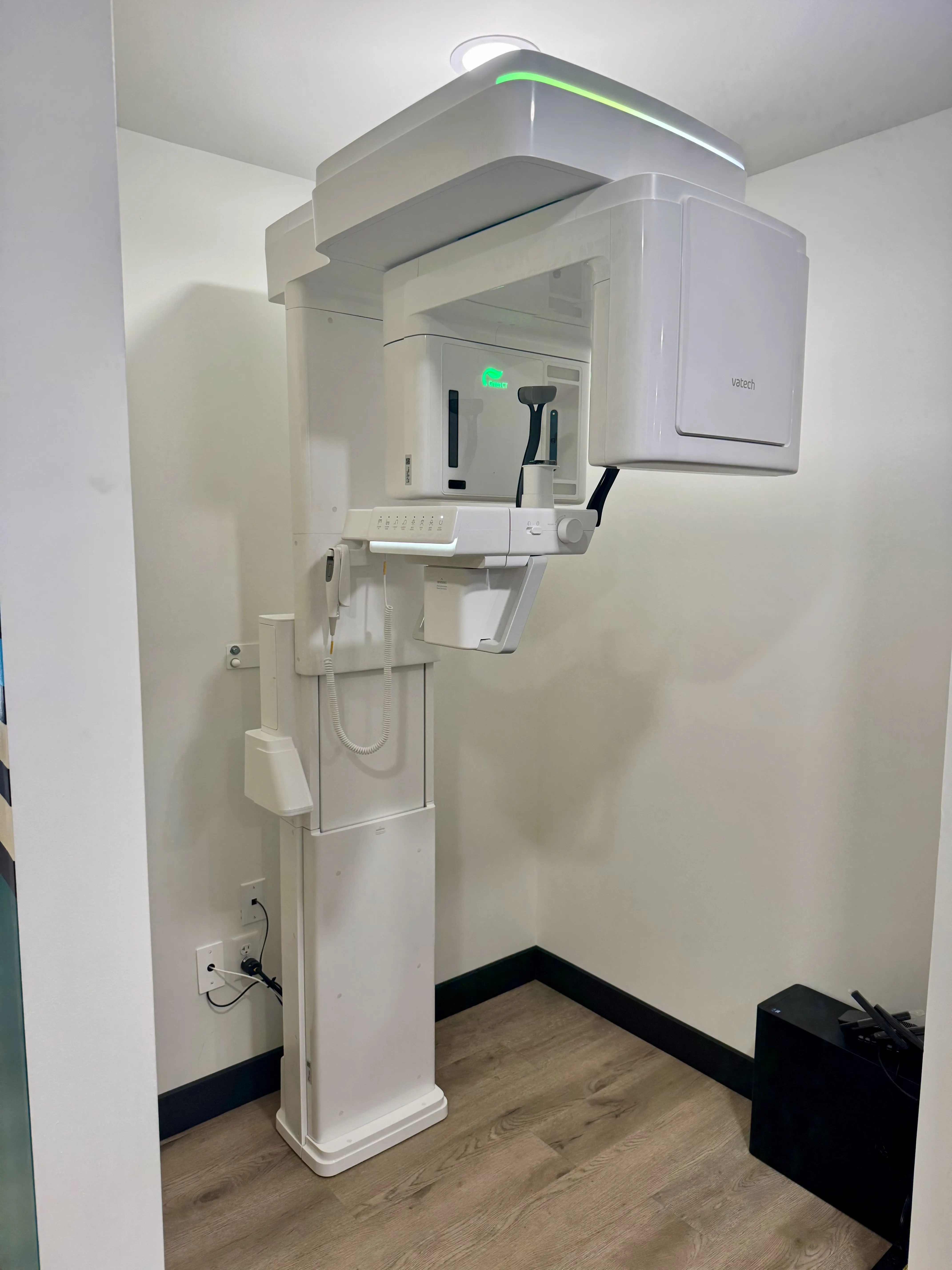
Cone Beam Computed Tomography (CBCT)
Why advanced 3D imaging matters for TMJ care
TMJ problems can be frustrating because many symptoms—jaw pain, headaches, popping, ear discomfort, or muscle tightness—can come from very different underlying causes. The key to effective treatment is understanding what is actually happening inside the jaw joint, not just treating symptoms.
Our office uses the X-21 by Vatech, a modern 3D CBCT scanner and one of the most up-to-date imaging systems available for evaluating the jaw joints. Unlike traditional X-rays, a 3D CBCT allows us to see the jaw joint from multiple angles and in true three dimensions—giving us a much clearer picture of joint shape, position, symmetry, and any structural changes that may be contributing to pain or dysfunction.
Better information leads to better decisions and a more confident treatment plan. Advanced imaging helps us focus on addressing the cause of TMJ problems, not just managing symptoms.
Frequently Asked Questions
Start With a Free Consultation
Take the first step toward the smile you’ve always wanted. Schedule your complimentary consultation today.